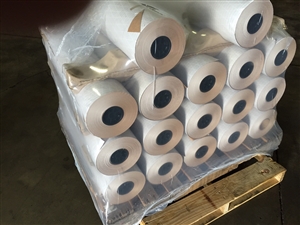
Orbital Stretch Wrappers vs Strapping: Which Packaging Method Is Better?

Orbital Stretch Wrappers vs. Strapping: Which Packaging Method Is Better?

Compare orbital stretch wrapping and traditional strapping for bundling long and awkward products. Learn how orbital wrappers improve load stability, reduce labor, and lower packaging costs.


When packaging long, oversized, or irregular products, companies often choose between two common containment methods: traditional strapping systems and orbital stretch wrappers. While strapping has been widely used for decades, many manufacturers and distribution facilities are now switching to orbital wrapping systems for improved efficiency, product protection, and load stability.

So which packaging method is better for your operation? The answer depends on your products, throughput requirements, labor costs, and shipping standards.

Why Companies Replace Strapping Systems

Traditional strapping systems are effective for basic containment, but they also create several operational challenges that can impact productivity and product quality.

Rising Labor Costs

Manual or semi-automatic strapping often requires significant operator involvement. Workers must position straps, tension them correctly, seal them, and sometimes apply corner protection. These repetitive tasks increase labor time and operating costs.

Product Damage

Straps can dent, crush, scratch, or deform products during transport or storage. This is especially common with:

  • Finished metal products
  • Lumber and trim
  • Plastic pipe
  • Delicate cartons
  • Coated or painted materials

Over-tensioned straps may also damage packaging edges or compromise product appearance.

Slow Throughput

Strapping systems can slow down production lines, especially when handling long or awkward loads that require multiple straps. Manual positioning and adjustments add additional cycle time.

Operator Fatigue

Repeated bending, lifting, and strap handling contribute to worker fatigue and ergonomic concerns. In high-volume operations, this can lead to reduced productivity and increased injury risk.


Advantages of Orbital Wrapping

Orbital stretch wrappers provide a modern alternative that offers stronger load containment and greater operational efficiency.

Safer Loads

Orbital wrappers apply stretch film evenly around products, creating secure and stable bundles without pressure points. This helps prevent shifting during transport and improves overall load integrity.

Improved Presentation

Stretch-wrapped products typically have a cleaner and more professional appearance than strapped loads. The film also helps protect products from:

  • Dust
  • Dirt
  • Moisture
  • Surface scratches

This is especially valuable for customer-facing shipments and retail-ready products.

No Strap Damage

Unlike strapping, stretch film conforms smoothly around products without digging into surfaces or edges. This reduces the risk of:

  • Scratches
  • Compression damage
  • Edge crushing
  • Strap marks

Faster Application

Many orbital wrapping systems operate continuously and automatically, allowing faster packaging speeds with less operator involvement. This increases throughput while reducing manual labor requirements.

Cast vs. Blown Stretch Film

Cast vs. Blown Stretch Film: Which Stretch Wrap Is Best for Your Application?

Choosing the right stretch film is essential for protecting pallet loads, reducing shipping damage, and improving warehouse efficiency. The two most common types of stretch wrap are cast stretch film and blown stretch film. While both are designed for load containment and pallet wrapping, each offers different advantages depending on your application.

In this guide, we compare cast vs. blown stretch film to help you choose the best stretch wrap for your warehouse, shipping, and distribution needs.

What Is Cast Stretch Film?

Cast stretch film is manufactured through a cast extrusion process where molten resin is rapidly cooled on chilled rollers. This process creates a stretch film with excellent clarity, quiet unwind, and consistent cling.

Cast stretch wrap is commonly used in warehouse and shipping environments where fast application, easy barcode scanning, and lower wrapping noise are important.

Benefits of Cast Stretch Film

  • Quiet unwind during application
  • Excellent clarity for barcode scanning and load identification
  • Consistent cling performance
  • Smooth and easy dispensing
  • Cost-effective for standard pallet loads

Best Applications for Cast Stretch Film

  • Standard warehouse pallet wrapping
  • Distribution centers
  • Uniform pallet loads
  • High-volume shipping operations
  • General freight protection

What Is Blown Stretch Film?

Blown stretch film is produced using a blown extrusion process where heated resin is air-cooled during manufacturing. This creates a tougher film structure with superior puncture resistance and stronger load holding power.

Blown stretch wrap is ideal for securing heavy, sharp, irregular, or unstable pallet loads that require maximum durability during transportation and storage.

Benefits of Blown Stretch Film

  • Superior puncture and tear resistance
  • Higher load retention and holding strength
  • Excellent performance on irregular loads
  • Strong cling for demanding applications
  • Reliable cold-temperature performance

Best Applications for Blown Stretch Film

  • Heavy pallet loads
  • Sharp or irregular products
  • Cold storage and freezer environments
  • Industrial manufacturing shipments
  • Long-distance freight transportation

Cast vs. Blown Stretch Film Comparison

Feature Cast Stretch Film Blown Stretch Film
Clarity Excellent Hazy appearance
Noise Level Quiet unwind Louder unwind
Puncture Resistance Moderate Excellent
Load Retention Good Superior
Cold Temperature Performance Fair Excellent
Best Use Standard pallet loads Heavy or irregular loads

Which Stretch Film Should You Choose?

Choose cast stretch film if you need quiet application, excellent clarity, easy handling, and cost-effective wrapping for standard pallet loads.

Choose blown stretch film if you need maximum puncture resistance, superior holding strength, and reliable performance for heavy, sharp, or unstable loads.

Many warehouses use both types of stretch wrap depending on the products being shipped and storage conditions.

Need Help Choosing the Right Stretch Film?

Complete Packaging Products offers a full selection of cast stretch film, blown stretch wrap, machine stretch film, and pallet wrapping solutions for industrial shipping applications.

Need expert assistance? Call 866-787-2790 to speak with a packaging specialist.

Encore’s Lightweight Stretch Dispenser Series

Wrap Smarter, Not Harder

Upgrade your wrapping game with Encore’s USA-made Lightweight Stretch Film Dispensers! Designed for seamless dispensing, these high-performance tools feature an easy-load system, adjustable tension, and magnetic attachments for ultimate convenience. With three SKUs (EP-830, EP-835, EP-838) and multiple size options, you get the perfect fit for any job. Say goodbye to heavy, clunky applicators—wrap smarter and faster today!

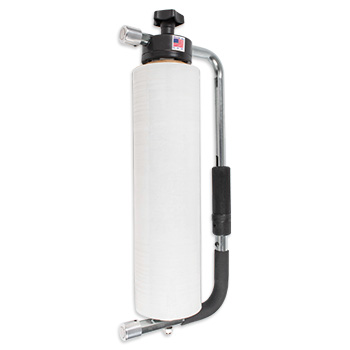
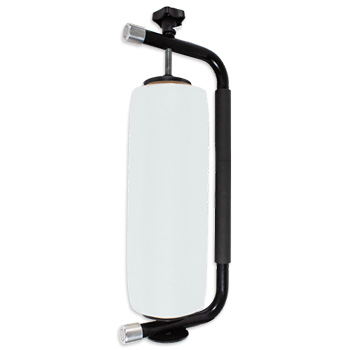
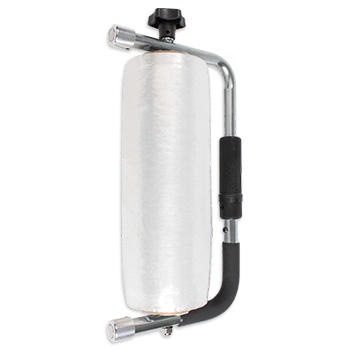
The EP-830 is a light-weight magnetic film dispenser that features a classic industrial design with solid-steel tubing and a tension control knob. Works with pre-stretch only. Includes a quick screw-on connector for quickly changing out film rolls. Features magnetic attachment for easily attaching to metal surfaces (i.e., metal racking, forklifts, door frames etc..).

The EP-835 is a lightweight magnetic stretch film dispenser designed for ease of use and efficiency. Its magnetic base allows for secure attachment to metal surfaces, keeping it within reach during wrapping tasks. The ergonomic design ensures a comfortable grip, while its durable construction supports smooth film dispensing. Ideal for warehouses, shipping, and packaging applications.

The EP-838 is a bare-bones, light-weight magnetic film dispenser features a straight-forward industrial design with solid-steel tubing and a tension control knob. Works with pre-stretch only. Features magnetic attachment for easily attaching to metal surfaces (i.e., metal racking, forklifts, door frames etc..).

Stretch film dispensers are an important tool used to hold and apply stretch film efficiently, making it easier to wrap and secure pallets, boxes, and other items for storage or shipping. They help reduce hand fatigue, improve wrapping consistency, and prevent film waste. Common applications include:

  • Warehouse & Logistics – Securing loads on pallets to prevent shifting during transportation.
  • Retail & E-commerce – Wrapping packages for added protection before shipping.
  • Manufacturing & Industrial Use – Bundling products or materials together.
  • Food & Beverage Industry – Wrapping perishable goods to maintain freshness.

Dispensers come in manual, handheld, or automatic versions, with some featuring tension control for better film stretch and coverage. Shop our entire lineup of Encore stretch film dispensers at: https://www.completepackagingproducts.com/Stretch-Film-Dispensers-s/1953.htm

Get Back On Track with This Advice for Business Growth

Get Back On Track with This Advice for Business Growth

Growing a business can be challenging, but it is important to take the right steps to position your company for success. Below are some of the best next steps you can take when you’re trying to grow your business.

Utilize Data Analytics

One of the best ways to grow your business is to use data analytics. By collecting data and analyzing it, you can gain insights into your customers and what they want. You can also identify areas of your business that need improvement. Use this information to make informed decisions that will help your business grow.

Consider updating your marketing strategy to take advantage of digital platforms and social media. You can also incorporate video marketing, influencer marketing or other innovative marketing tactics to attract potential customers.

Plan to Expand Internationally

Expanding a business globally can be a daunting task, but it presents an incredible opportunity for growth and expansion. By taking the time to research and plan, businesses can successfully navigate unfamiliar waters and reap significant rewards.


One way to expand globally is by exploring new markets overseas, which can be an excellent way to reach new customers and diversify revenue streams. Additionally, partnering with foreign companies can provide valuable insights into local markets and help accelerate business growth. Finally, opening franchises in other countries can be another viable option, as it allows businesses to leverage existing infrastructure and resources.


However, it’s essential to perform due diligence and engage in strategic planning to ensure that expansion efforts are successful and sustainable. Factors such as language barriers, cultural differences, and regulatory requirements must be considered carefully to mitigate potential risks and maximize opportunities.

Adopt Intelligent Automation

In today’s digital age, businesses are rapidly adopting intelligent automation to streamline their operations, become more efficient, and ultimately increase their bottom line. Intelligent automation refers to the use of artificial intelligence, machine learning, and other advanced technologies to automate manual, repetitive, and time-consuming business processes.

By adopting intelligent automation, companies can not only improve their productivity but also free up their employees to focus on more strategic tasks. You may consider this option and how it can positively impact business processes.

Go to Networking Events

Networking events are a great way to meet new people and expand your business. Attend networking events regularly, and take advantage of the opportunities to meet new potential customers and business partners. With the right approach and mindset, you can create meaningful connections that will help your business grow.

Keep Digitized Business Documents

Digitizing business documents when expanding provides more control and accessibility, reduces time spent on physical document management, and improves collaboration and productivity. You can save your documents as PDFs and select a PDF editor to make changes or add notes.

Change Your Business Structure to an LLC

Turning your business into a limited liability company (LLC) can offer several advantages. It provides you with legal protection and separates your personal assets from your business assets. This can reduce your personal liability if your business is sued. It can also make it easier to obtain financing and attract potential investors.

Expand the Number of Products or Services You Offer

Offering a variety of products or services can help your business grow. This can provide additional revenue streams and help you attract new customers. Consider expanding your product or service lineup to meet the needs of your customers and stand out from your competitors.

Update Your Marketing

Marketing is a crucial aspect of growing your business. To effectively market your business, you need to know your target audience and how to reach them.

Growing a business is an ongoing process that requires careful planning, hard work and the willingness to take risks. By incorporating these next steps, you can take your business to the next level and achieve greater success. Utilize data analytics, network, turn your business into an LLC, diversify products or services, and update your marketing strategies. Also, plan to expand internationally and consider adopting intelligent automation to automate business processes. With patience and perseverance, your business can achieve its full potential.


Shop Complete Packaging Products for high-quality wholesale strapping and packaging supplies.


Tips for banding your products for shipping


Here are some tips for banding your products for shipping.

  • Choose the right type of banding Material. There are a variety of banding materials available including plastic, steel and cord. The type of material you choose will depend on the weight and size of your products.
  • Use the right amount of banding. You don’t want to use too much banding, as this can damage your products. However, you also don’t want to use too little banding, as this won’t provide enough support.
  • Apply the banding correctly. Make sure that the banding is applied evenly and securely.
  • Label your products. Make sure that your products are labeled with the correct shipping information.
  • Inspect your products before shipping. Make sure that your products are in good condition before you ship them. We take pictures of our skids before we ship them.

By following these tips, you can help insure that your products are shipped safely and securely.

Strategies for Entrepreneurs to Stay on Top of Inventory Management While Experiencing Business Growth


Experiencing business growth is a great sight for any entrepreneur. But, while growth brings in higher revenue and new opportunities, it also leads to an increase in inventory. To ensure the business continues its upward trend, sound inventory management is key, and with the right strategies, the business will always have enough stock on hand to meet customer demands and maximize sales. In this article by Complete Packaging Products, we’ll explore the best inventory management strategies businesses should implement to keep up with their growth aspirations.


    1. Following the FICO Approach


The first in, first out (FICO) approach is used by businesses in all industries worldwide, as reported by Investopedia. As the name suggests, this technique involves selling the oldest inventory first, which makes complete sense as goods can expire or get damaged the longer they stay in storage. This is especially the case for businesses that sell perishable goods.


Following the FICO method will help your business maintain a healthy inventory turnover ratio and minimize losses due to damaged goods.


Following the FICO method will help your business maintain a healthy inventory turnover ratio and minimize losses due to damaged goods.


    2. Digitizing and Tracking Your Stock Levels

    1. Basing the amount of inventory you need based on guesswork is futile as you are bound to

over or underestimate the requirement

    1. . For instance, a product may have a high demand for a short period of time, during which you order a high stock assuming that it will all be sold. However, shortly after demand plateaus, you are stuck with goods that cannot be sold, resulting in a loss of money and space in the warehouse.

That is why every item that enters your warehouse has to be tagged, scanned, and stored in a specific slot. This allows you to keep track of inventory levels in real-time and manage it according to the demand and supply of goods. Additionally, rather than following a paper-based approach to creating and storing inventory receipts, convert documents into PDFs and upload them to inventory management software. If you’ve never created PDFs before, don’t fret, as you can convert it here within a few clicks!


    3. Hiring a Warehouse Manager


As the owner, you do not want to spend most of your time tracking inventory each day. The smart option is to hire an experienced warehouse manager to manage this task for you. A warehouse manager will:


      • Keep track of incoming and outgoing inventory
      • Ensure that the warehouse is clean and secure and that goods are stored at the required temperature
      • Calculate inventory-related ratios and present findings


The number one benefit will be that you’ll save hours each day which can be dedicated towards other important areas of the business.


Benefits of Inventory Management


Now that you have a better idea regarding how to go about managing inventory, let’s dive into the benefits sound inventory management practices provide:


      • Keeps Wastage to a Minimum: Accurately managing inventory means that you always purchase and store the right amount of stock. As a result, no excess resources are spent on procuring and storing unwanted goods.


          • Improves Customer Satisfaction: Having goods in stock leads to customers receiving their orders during the provided time frame. This results in higher customer satisfaction compared to competitors and a strong brand image.


      • Provides the Benefit of Automation: Not only does inventory management software keep track of goods in real-time, but it will also update required ratios and budgets automatically. Saving you and your employees numerous hours each day to dedicate to other tasks.
      1. Establishing an LLCPurchasing, storing, and selling inventory involves entering into contracts with other businesses. While this is a standard business practice, disagreements and problems can arise, and if you’re running the business as a sole proprietorship, your assets and personal finances come at the risk of litigation.According to ESCA News, the best way to protect yourself from such risks is to establish a limited liability company. With an LLC, your business is considered a separate legal entity, keeping your personal assets safe and secure.Having an effective inventory management system is essential for a growing business. Following the FICO approach and digitizing the inventory process is bound to keep costs in check. Additionally, remember to hire an experienced warehouse manager who will ensure your inventory is safe and accounted for.

Inventory Management and the Customer Experience

Creating a stand-out customer experience goes beyond great marketing and customer service. Small businesses that want to improve customer loyalty also need to meet expectations when it comes to ordering and fulfillment. Unfortunately, many small businesses struggle with inventory management problems that leave their sales lacking and their customers disappointed.
3 Inventory Management Mistakes That Hurt Small Businesses
Running Out of Stock
You can’t sell a product that’s not on the shelf. When a business runs out of stock, one in three shoppers will abandon their purchase or shop elsewhere. Even the occasional stockout hurts a business’s bottom line, but when stockouts become a chronic issue, it’s disastrous. By the third time that a customer encounters a stockout, the odds of a lost sale skyrocket to 70 percent.

Stockouts, or out-of-stocks (OOS), happen for a variety of reasons:
● Lack of demand forecasting.
● Failure to reorder and restock inventory in a timely manner.
● Inaccurate inventory data due to errors or shrinkage.

However, keep in mind that stockpiling isn’t the solution. Warehouse space is expensive, and overstocking leads to problems with shrinkage due to damaged, expired, or obsolete stock.
Overselling
Overselling adds another layer of frustration to the customer experience. When a business oversells a product, they take payment for an item that they don’t have in stock. Primarily an issue for e-commerce merchants, especially those who sell on multiple channels, overselling has a serious impact on customer satisfaction.

Overselling happens due to:

● Decentralized inventory management.
● Outdated inventory data.
● Inaccurate inventory data due to errors or shrinkage.
Slow Order Fulfillment
It’s not just the ability to fulfill an order that matters; it’s also the speed at which you do it. Nearly 73 percent of customers report they’re unlikely to make a repeat purchase after a poor delivery experience. While not all delivery delays are unavoidable, if order picking is a bottleneck for your business, it’s critical to do something about it.

Order-picking delays are typically caused by:

● Disorganized warehouses.
● Mis-picked items.
● Labor-intensive picking processes.
Improving Inventory Management
Inventory problems can cause irreparable damage to a company’s reputation. Before that happens, small business owners should improve their inventory management system. The biggest mistake is relying on manual inventory counts. Not only are manual methods highly error-prone, but they’re also time-consuming, adding to labor costs and extending the time it takes to fulfill orders. A barcode system is an affordable step up from manual tracking that allows for fast, accurate counts when paired with the right software.

As for software, businesses should opt for cloud-based applications or modules that update in real time across multiple locations and channels. With data constantly updating as inventory is received and sold, businesses no longer have to worry about selling items they don’t have or running out of stock without noticing. To really improve the customer experience, multi-channel retailers should choose software that allows shoppers to look online to see which products are in stock locally.

With a more efficient inventory system, businesses can afford to perform regular cycle counts rather than shutting down for an inventory audit once per year. With frequent counts, businesses can identify and solve shrinkage problems before they impact the customer experience.

Software also improves a business’s ability to forecast demand. With past sales data readily available, companies can predict future sales trends and adjust inventory levels accordingly.

Last but not least, get shift scheduling software to help everyone stay on the same page. These packages allow you to create schedules for your employees whether you’re in the office or on the go. Most importantly, you can send real-time alerts regarding schedule changes in the event that you need additional coverage to manage any inventory issues.

Upgrading to a barcode inventory system isn’t just good for customer satisfaction; it’s also a smart move for a business’s bottom line. In addition to improving the customer experience, automated inventory management requires far less time and expense than manual methods. Compared to the high cost of chronic inventory problems, adopting these inventory management practices is a no-brainer.

Complete Packaging Products is your business’ one-stop shop for packaging and shipping supplies. Call us toll-free at 866-787-2790 for more information.

Image via Unsplash

Advantages of Woven Polyester Cord Strapping

ADVANTAGES OF WOVEN POLYESTER CORD STRAPPING

Complete Packaging Products has been providing excellent services in the packaging and strapping industry since 1999. We provide complete lines of products needed for final packaging and goods transportation security. We are a distributor of the highest quality products from the top manufacturers. Our offerings include steel and plastic strapping, strapping seals, and strapping tools such as tensioner, sealer, and cutter. We also have coil separators, stretch films, tapes, edge protectors, staples, poly-coated kraft paper, corrugated barriers, bubble wrap, foam cushioning, and more.

What is Strapping?

Strapping is a flat material used for bundling and reinforcing packaged shipments. It is used in agriculture, construction, shipping, packaging industries, or anywhere items must be held or fastened together. It comes in steel and plastic.

Disadvantages of Steel Strapping

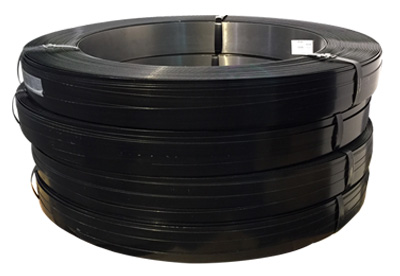
Regular Duty Cold-Rolled Steel Strap


Steel straps are impressively durable and are widely used in regular and heavy-duty applications. Their surface can be painted, waxed, or galvanized for an added layer of protection. While steel strapping has its advantages, it also has drawbacks. These include the following:

  1. Steel straps have a high potential to rust; this can stain the cargo they hold.
  2. The sharp edge of the steel strap can tear or scratch the package or material it bundles.
  3. Several physical hazards are associated with steel straps such as deep wounds from improper cutting, recoiling after cutting, and accidental breaking.
  4. The heavy weight of the steel strap makes it difficult to handle. It exposes people dispensing it to ergonomic hazards.
  5. Steel is expensive.

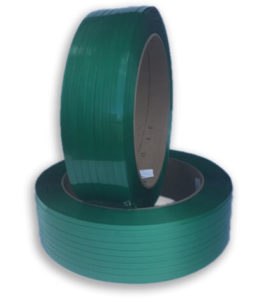
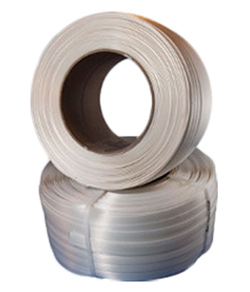
Polyester strapping is one of the strongest plastic strapping products. This can be used as an alternative to steel strapping in varied applications and is available in nonwoven and woven constructions. The nonwoven polyester straps, also known as composite straps, consist of unidirectional fiber strands that are brought together by a polymer. Polyester woven straps are made of fiber strands weaved together in a multi-directional pattern; this makes them stronger than nonwoven polyester straps.

Why Switch to Woven Polyester Strapping?

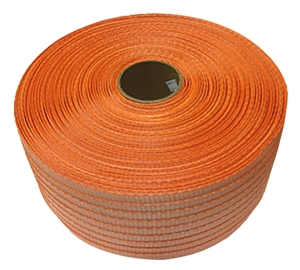
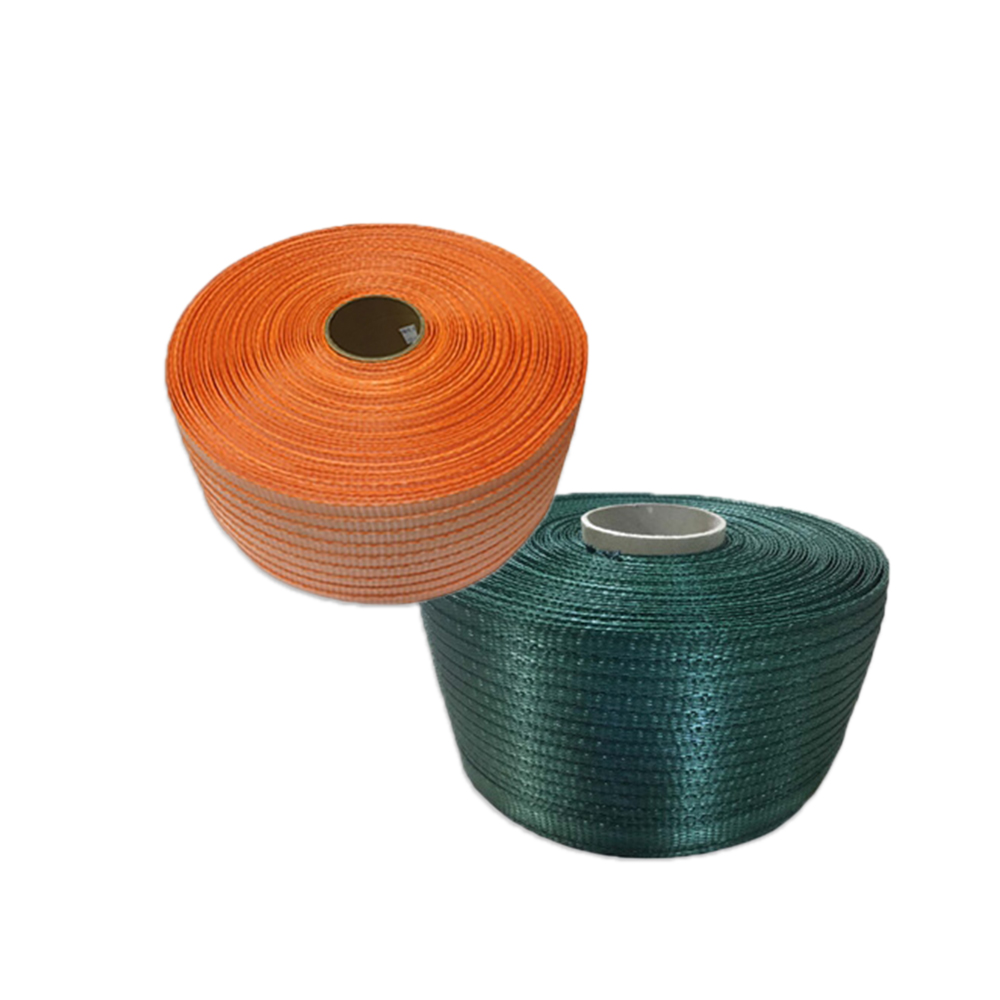
Woven Polyester Cord Strapping

Woven polyester cord strapping can be used in heavy-duty applications and replace steel strapping. Here are the advantages of woven polyester cord strapping over steel strapping:

Excellent Mechanical Properties

Woven polyester strapping exhibits excellent tensile strength and flexibility because of the polyester fibers it is composed of. The weaved construction of its fibers contributes to its good elastic properties, allowing the absorption of force due to heavy loads without breaking. Therefore, it is a reliable strapping for heavy-duty bundling, tying, and unitizing applications. Unlike steel strapping, it does not break or snap, which can cause injuries on-site.

High Weather-Resistance

Woven polyester strapping is resistant to high temperature, ultraviolet rays, and moisture. Despite being exposed to extreme weather conditions, it maintains its shape and does not deteriorate. It is also not susceptible to stain or corrosion like steel strapping.

Significant Cost Savings

Strapping Protector

Steel is the most expensive material for strapping. In addition, the use of steel strapping requires additional packaging materials to protect the material it holds from the damaging effect of steel strap; this incurs additional costs. Woven polyester costs less than steel. It is also soft and would not damage the package being held. Thus, it can be used without strapping protectors. Lastly, woven polyester strapping can be reused more than steel strapping because of its re-tensioning abilities; this eliminates the need to buy new straps.

Safer to Use

As it is lightweight, woven polyester strapping eliminates the ergonomic hazards present in steel strapping. Additionally, the soft texture of woven polyester straps helps avoid injuries such as lacerations from sharp edges and lash back. Unlike steep straps, woven polyester straps can be held and cut without causing injury.

Woven polyester strapping is not only suitable for use in securing heavy loads. It can also be used in low to medium applications requiring high compressibility including bundling and palletizing boxes, package reinforcement, and unitizing small items. Its stretchability enables it to hold small packages securely. On the other hand, the use of steel strapping is limited only to applications that require minimal stretch.

To learn more about our exclusive packaging and strapping deals, visit our website. For other inquiries, do not hesitate to contact us.


Measuring for a Gusseted bag


Extra large plastic bags for covering pallets during shipment are easy to use. Just slip over the top of the pallet and drop down to cover the entire product. Widely used to cover pallets that will store inside or outside. Also great for shipping to and from various locations. Pallet covers protects your product(s) from the weather, dust, paint, water, snow, and other types of debris.

The length and width of gusseted bags are measured just like poly bags, by outside dimensions side to side and from top to bottom. The gusset is measured by its expansion diameter (D).

Note: Depth (D) is the shorter of the 2 sides.

1. Width (W) of the cover = width of the pallet + 1-2”
2. Depth (D) of the cover = depth of the pallet + 1-2”
3. Length (L) of the cover = height of the pallet + half of the depth

Example: Pallet:  48” W x 40” D x 48” L
Cover:  50”W x 42”D x 66”H