Sizing Shrink Wrap for your boat

Sizing Shrink Wrap for your boat

Simply measure the boat. You can either measure side to side or back to front. Use a long tape
measure to help with this process. For side to side, measure from the perimeter strap on one side up
over the highest point of the boat to the perimeter strap on the other side.

Then, add about a foot on each side to the total to account for tucking and fusing on each side. You can also measure from the back to the front of the boat, starting at the motor and measuring to the front of the boat, and adding a foot to account for tucking and fusing.

Be sure to measure at the longest part of the boat as well. This method works well for smaller boats but may not be possible for all projects.

                      Distance between
                             the rub rail                                     Above the      
                                      &                             =               rub rail
                      the highest point                              measurement
                            on the boat

Most traditional boats have a rub rail around the outer edge of the boat. The above the rub rail
measurement is the distance between the rub rail and the highest point on the boat where the
shrink wrap is expected to cover.

So, from the same spot as where you’ll be taking your below the rub rail measurement, measure from the rub rail to the center of the highest point on the boat.

Next, figure out the below the rub rail measurement. This measurement is based on your preference
of how far down below the rub rail that you would like your shrink wrap to fully cover.

                          How far below                                               Below the 
                             the rub rail                         =                         rub rail 
                        the shrink wrap                                          measurement
                              will cover

Cover the exposed area of the boat, which means everything above the waterline up to the rub rail.
Be sure to take this measurement in the same place along the both with which you took the above
the rub rail measurement.

Last, figure out your tucking and fusing measurement. This accounts for the extra material that will
be used to tuck the shrink wrap edges under the strap and heat weld the shrink back to itself. Add
6”-1’ per side.

                        Extra material used
                        to tuck shrink wrap                   =               Tucking and fusing
                              edges under                     
                             (6” per side)

Add the above the rub rail measurement, the below the rub rail measurement, and the tucking and
fusing measurement and multiply this amount by 2 to get your desired length of shrink wrap.

                  (Above the rail                            +                Below the rub rail          + 
                     measurement                                                   measurement

                         Tucking                                                             Required
                      and fusing                               x 2 =                 shrink wrap
                  measurement)                                                  measurement

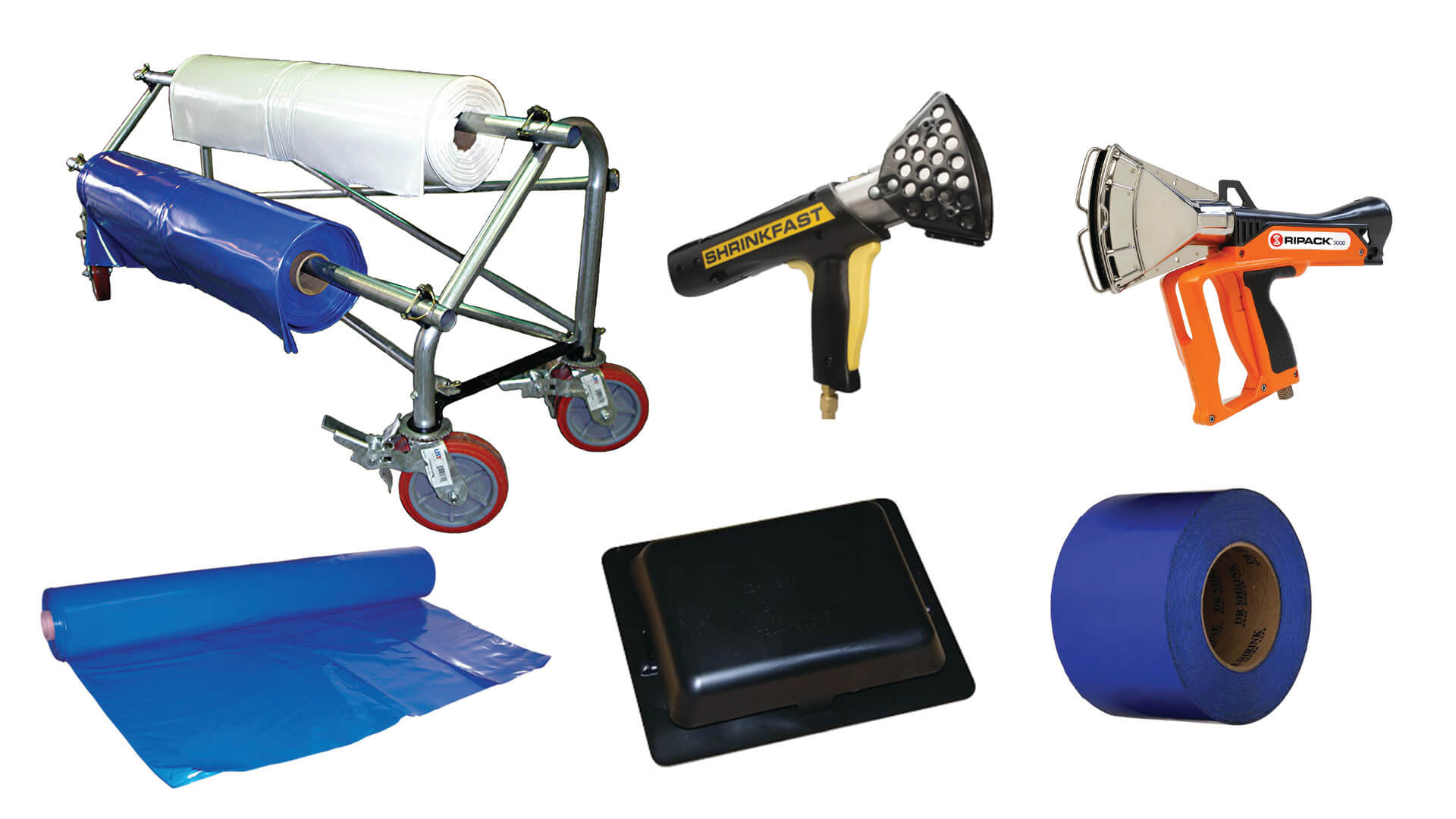
Our 7 mil shrink wrap is the most commonly used shrink wrap for recreational and personal boat
protection. It’s perfect for wrapping all size boats. Ideal for wrapping objects that stay in one place.

                                                          Complete Packaging Products
                                                                         866-787-2790
                                                 www.completepackagingproducts.com

Stainless Steel Banding

A customer was using Cord Strapping for nesting installs and found that it was not performing well for long term outdoor conditions.

Polyester cord offers a heavy duty strapping solution with excellent resistance to moisture. It is frequently used in outdoor applications, lumber applications, and other agricultural and boating industries.

Unfortunately cord strapping can deteriorate when exposed to Pigeon droppings. The best strapping for this application is Stainless Steel strapping.

Stainless steel strapping is some of the strongest strapping you can use. Its “break strength” — or the amount of weight it can take before breaking — is immense.

Compared to most other strapping materials, it is also extremely resistant to UV radiation, making it less likely to corrode over time when exposed to the outdoors.

In general, it’s an extremely resistant material for both indoor and outdoor use. This could save a lot of maintenance and replacement money down the line.

“Thanks to CPP, we no longer have to use ratchet straps for nesting installs that will eventually fail.”

A big shout out to Complete Packaging Products ♥️🦉♥️

Thanks to them, we no longer have to use ratchet straps for nesting installs that will eventually fail. Instead we will be using stainless steel strapping that will outlast any other product on the market. It will make nesting installs safer for the owls and the workers below.

The staff at Complete Packaging Products was super helpful in going over different metal strapping devices and we’re excited to get our first order right in time for this years install season. They were also nice enough to give us a discount.

So….. If your looking for packaging options and/or your purchasing packing items but would rather support a family owned business that cares about wildlife this is the perfect company for you!!!

Thanks friends ♥️🦉♥️

Plastic Strapping Guide

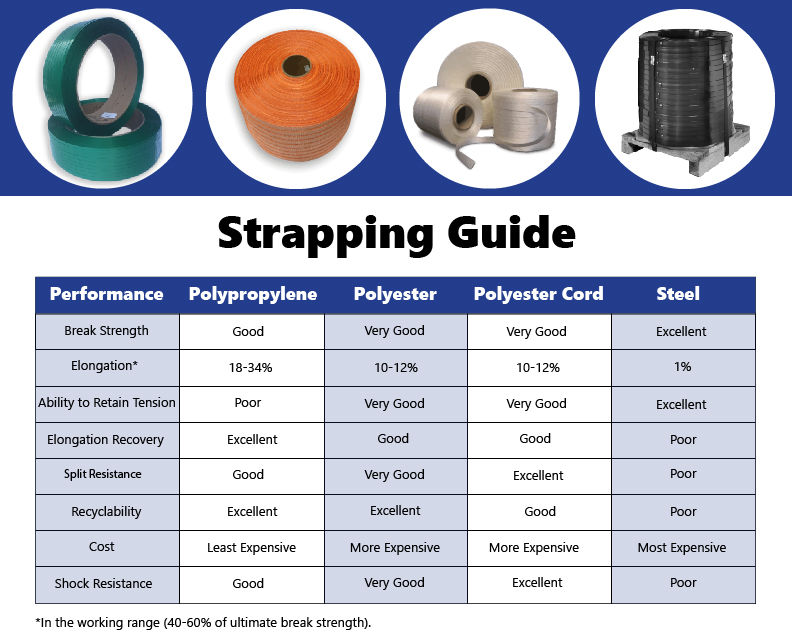
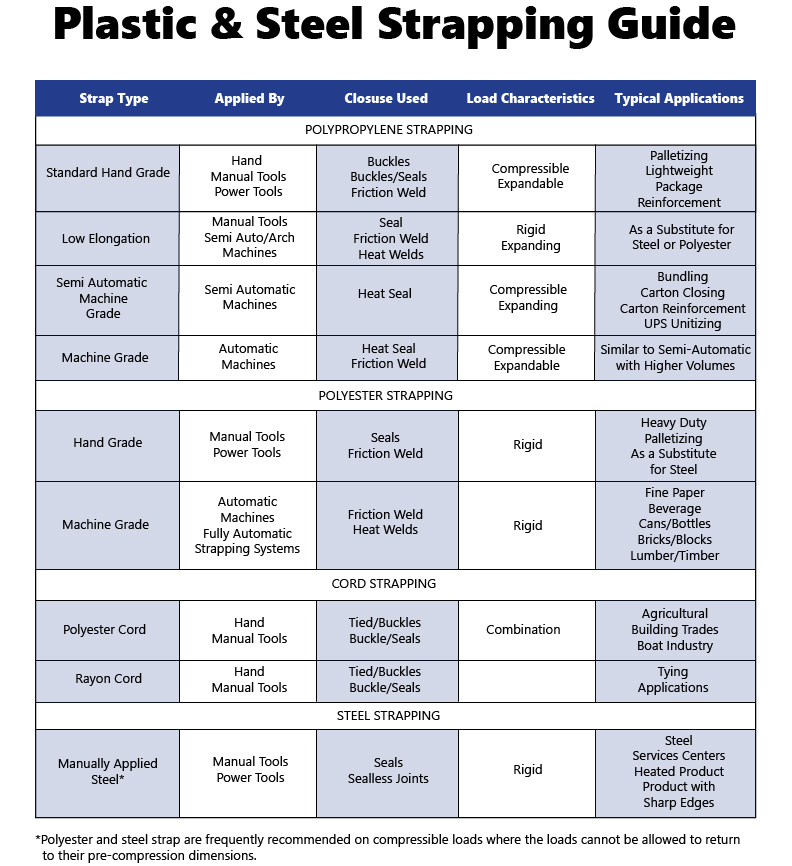
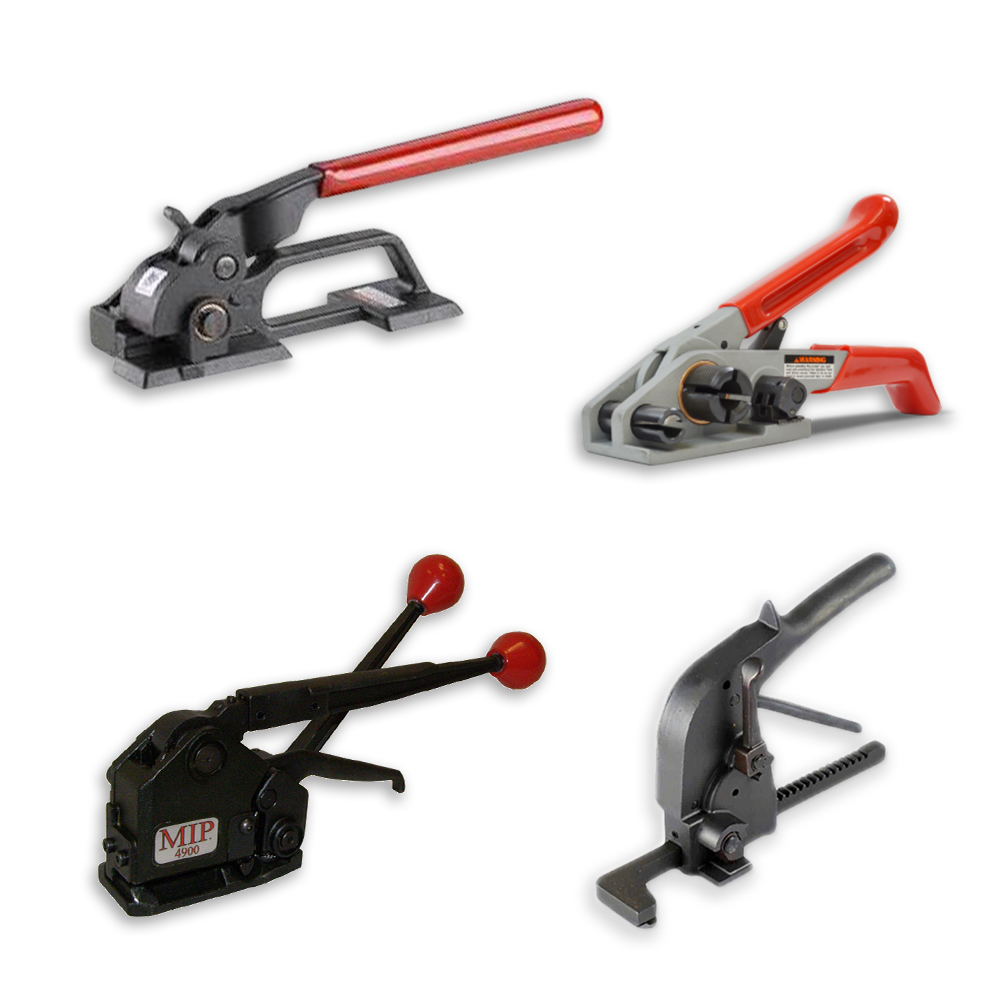
All plastic strapping can be applied manually and sealed with either buckles or seals. Manual application is ideal for low and moderate volume users and requires little investment in tooling. In addition, manually applied strapping is frequently specified in light duty, high volume applications where the cost of an automated system cannot be justified. Polypropylene and polyester strapping can also be applied with battery powered and pneumatic tools using either a friction weld or a mechanical seal. A moderate investment in tooling can frequently be  justified by seal and buckle savings in sealless tools.

The next level of application utilizes semi-automatic or automatic machines. When applying strapping with automatic machines, machine grade strapping must be specified.

Machine grade strapping is manufactured under closer tolerances and has minimal camber. Semi automatic (archless) machines have become affordable for even occasional users, and should be specified with semi-automatic strapping for maximum cost effectiveness. Automatic machines can range from operator assisted full arch machines to fully automatic in-line systems.

The general rule in specifying application methods is this:

Up front expenditures in tooling and machinery will increase tension capability, consistency, and joint efficiency, while reducing costs of closures, waste and labor.

COMMON STRAPPING TERMS

Break Strength: The amount of force, expressed in pounds, required to break the strap.

Camber: Camber is the amount of “twist” or curve in strapping. Camber is not a major factor in manually applied strapping. However, machine grade strapping must be relatively camber free to allow it to travel through the machine’s arch.

Creep: A loss of retained tension, or tension decay, creep is the loss in initial tension that occurs over a period of time.

Elongation: This is the amount of stretch in the strap as force or tension is applied. Elongation is generally expressed in the working range (40-60% of the ultimate break strength).

Elongation Recovery: This is the strap’s ability to recover to its original state after tensioning.

Embossing: Embossing is the textured pattern applied to most machine-direction oriented polypropylene strapping in the manufacturing process. A properly designed and applied embossing pattern will enhance split resistance, improve stiffness characteristics, and increase joint efficiency.

Hand Grade Strapping: Hand grade product is designed to be applied by hand, with manual, battery powered or pneumatic tools.

Joint Efficiency: The total usable strength of strap is only as strong as the joint holding the two ends together. The “joint efficiency” is expressed as a percentage of the total breaking strength of the strap.

Machine Grade Strapping: Machine grade strapping is polypropylene or polyester designed to run through full track, arch machines.

Retained Tension: Retained tension is the strap’s ability to retain its initial tension level after the passage of time. Of all non-metallic, strap polyester will have the highest retained tension, when properly applied.

Semi Automatic Strap: This is a cost efficient strap designed for archless machines. It lacks the stiffness required for full track machines but is an excellent alternative for semi automatics.

Shock Resistance: This is the strap’s ability to stretch and return to its original state without breaking when subjected to sudden impact.

Split Resistance: The strap’s ability to withstand lateral tears.

Thickness: Because of its embossing pattern, strap thickness is a relatively nebulous measurement. A standard ½” machine grade strap can be embossed to a thickness of anywhere between .014 and .030, depending on how deep the embossing pattern is. In an overly embossed strap, the thickness measurement will be greater, and the break strength will be lower.

Specifying By Break Strength

The following general formulas will yield a starting point for how much break strength is needed to strap a product, depending on the application. Ratios apply to total strap break strength, so the required tensile strength must be divided by the number of straps to be applied. In addition, strapping requirements are influenced by many other factors besides weight. The intended use of the strap, handling characteristics, and load characteristics must be factored into the specification. Consequently, packages traveling long distances under adverse conditions will require extra protection.

Carton Reinforcement:A 3 to 1 ratio of total strap break strength to package weight is a good guideline for reinforcement applications.

Palletized Cases:Use the following formula to determine strap break strength on palletized loads:

Pallet Weight x 1.5 / # of Straps = Required Tensile Strength

Unitizing and Bundling: In this application the strap is the package. In order to protect against failure use a 5 to 1 ratio of strap break strength to package weight.


Steel Banding

Steel Banding

Regular-Duty steel strapping is a medium carbon steel strap that is cold rolled and engineered for higher breaking strength while also being a thinner gauge than regular-duty steel straps. In light to medium-duty uses it may be applied as a substitute for heavy gauge regular-duty steel strapping. By doing so, you can reduce costs associated with material and shipping.


High-Tensile steel strapping is a heat-treated, cold-rolled medium carbon steel strapping material designed for the most heavy-duty usage. This highly engineered steel strapping offers high tensile strength and outstanding shock resistance, making it the ideal choice for those heaviest-duty applications.


Gator Lash Strength Comparison


GatorLASH® Heavy Duty Woven Cord Polyester Lashing is designed to secure heavy and irregularly shaped loads onto flatcars, flat racks, gondolas, flatbeds, rail-cars and boxcars. Great in harsh environments. Some advantages of GatorLASH® include:

  • Cut-to-length so it eliminates waste
  • Woven polyester construction is naturally shock absorbing. Will not break, split or crack
  • Easy to use and may be re-tensioned
  • Fast application with one tool
  • ASTM D3950 independent lab certified
  • AAR aproved for rail securement
  • Conforms to the requirements pf multiple regulatory agencies
  • Customize your lashing with your company name, logo or message

Embossed Poloyester

The advantages of using Embossed Poloyester instead of Smooth Poloyester strapping

  • Embossed polyester takes less force to tension which results in tighter packages.
  • If you are using battery tool with embossed, you will get more cycles out of your battery before charging is required.
  • Its been shown that you get better seal joint effeciency with embossed as opposed to smooth.
  • Embossed polyester tends to split less.