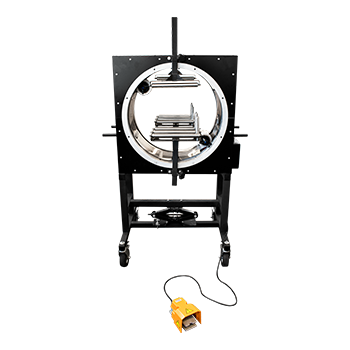
Orbital Stretch Wrappers vs. Strapping: Which Packaging Method Is Better?
Compare orbital stretch wrapping and traditional strapping for bundling long and awkward products. Learn how orbital wrappers improve load stability, reduce labor, and lower packaging costs.
When packaging long, oversized, or irregular products, companies often choose between two common containment methods: traditional strapping systems and orbital stretch wrappers. While strapping has been widely used for decades, many manufacturers and distribution facilities are now switching to orbital wrapping systems for improved efficiency, product protection, and load stability.
So which packaging method is better for your operation? The answer depends on your products, throughput requirements, labor costs, and shipping standards.
Why Companies Replace Strapping Systems
Traditional strapping systems are effective for basic containment, but they also create several operational challenges that can impact productivity and product quality.
Rising Labor Costs
Manual or semi-automatic strapping often requires significant operator involvement. Workers must position straps, tension them correctly, seal them, and sometimes apply corner protection. These repetitive tasks increase labor time and operating costs.
Product Damage
Straps can dent, crush, scratch, or deform products during transport or storage. This is especially common with:
- Finished metal products
- Lumber and trim
- Plastic pipe
- Delicate cartons
- Coated or painted materials
Over-tensioned straps may also damage packaging edges or compromise product appearance.
Slow Throughput
Strapping systems can slow down production lines, especially when handling long or awkward loads that require multiple straps. Manual positioning and adjustments add additional cycle time.
Operator Fatigue
Repeated bending, lifting, and strap handling contribute to worker fatigue and ergonomic concerns. In high-volume operations, this can lead to reduced productivity and increased injury risk.
Advantages of Orbital Wrapping
Orbital stretch wrappers provide a modern alternative that offers stronger load containment and greater operational efficiency.
Safer Loads
Orbital wrappers apply stretch film evenly around products, creating secure and stable bundles without pressure points. This helps prevent shifting during transport and improves overall load integrity.
Improved Presentation
Stretch-wrapped products typically have a cleaner and more professional appearance than strapped loads. The film also helps protect products from:
- Dust
- Dirt
- Moisture
- Surface scratches
This is especially valuable for customer-facing shipments and retail-ready products.
No Strap Damage
Unlike strapping, stretch film conforms smoothly around products without digging into surfaces or edges. This reduces the risk of:
- Scratches
- Compression damage
- Edge crushing
- Strap marks
Faster Application
Many orbital wrapping systems operate continuously and automatically, allowing faster packaging speeds with less operator involvement. This increases throughput while reducing manual labor requirements.